
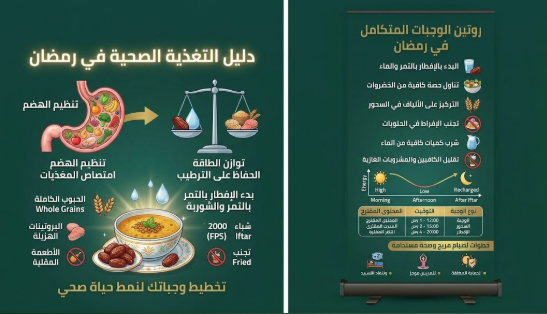
Healthy eating in Ramadan depends on providing the body with sustained energy, maintaining hydration, and avoiding digestive disorders. The most important steps are:
-
A balanced, gradual iftar: Start with dates and water to prepare the stomach, then have a complete meal containing protein, vegetables, and complex carbohydrates while avoiding fried and high-fat foods.
-
A satisfying, lasting suhoor: Focus on slow-digesting foods rich in fiber and protein (such as fava beans, eggs, and yogurt) to reduce hunger during the fast.
-
Regular hydration: Drink enough water (2 to 3 liters) distributed between iftar and suhoor, and avoid sugary drinks and soda.
-
Limiting sodium and sugars: Reduce salt and pickles to prevent severe thirst, and replace heavy Ramadan desserts with fruits or raw nuts.
-
Avoiding over-splitting meals: Eat moderate meals and avoid eating quickly to prevent bloating, sluggishness, and indigestion.